Hope and freedom are among the most enduring human values, shaping how individuals persevere through difficulty and how they imagine the possibilities before them. In literature, these values are often portrayed not as abstract ideals but as lived experiences captured in image and metaphor. Through the constancy of hope within the soul, Emily Dickinson in “‘Hope’ is the thing with feathers” presents resilience as an inward anchor. More than a century later, Mary Oliver in “Wild Geese” portrays it as an outward call to freedom found in the body’s liberating permission. Read in dialogue, these two poems highlight the interplay between inner endurance and outward possibility, suggesting that human flourishing depends on both what steadies us internally and what guides us externally.
Here are the opening lines from both poems

“Hope” is the thing with feathers (Emily Dickinson, 1861)
“Hope” is the thing with feathers –
That perches in the soul –
And sings the tune without the words –
And never stops – at all –


Wild Geese (Mary Oliver, 1986)
You do not have to be good.
You do not have to walk on your knees
for a hundred miles through the desert, repenting.
You only have to let the soft animal of your body
love what it loves.
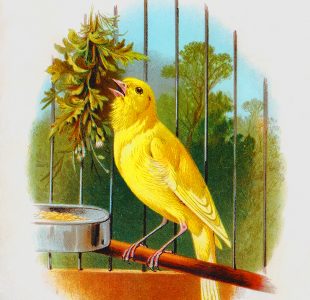
Emily Dickinson’s image of hope as a bird “that perches in the soul” is striking for the way it engages multiple senses: the feathery form evokes vision, its song suggests sound, and its perching evokes touch. The metaphor highlights not only the delicateness of hope but also its persistence— it “never stops—at all.” Hope is thus framed as a constant, almost instinctual companion to human life. In Dickinson’s rendering, hope is not an occasional comfort but an enduring force that steadies the inner life.
Though writing on a different theme, Mary Oliver, too, considers a value that greatly guides human life. She presents freedom as an acceptance of the body’s desires: “You only have to let the soft animal of your body / love what it loves.” This invitation can be read as a radical permission to release oneself from guilt and cultural demands. Yet such a conception of freedom raises important questions. If freedom is understood solely as bodily indulgence, it risks overlooking the role of moral reasoning and guiding principles. Freedom may be more fully realized not in unrestrained impulse but in the capacity to choose the good, the beautiful, the right, and the just.
Read together, these two poems illuminate how resilience is shaped both by what anchors the self internally and by what directs it outwardly. Hope, in Dickinson’s account, sustains the soul by offering persistence against despair, while freedom, in Oliver’s, defines the scope of action available to the body and spirit. Taken together, they suggest that a flourishing human life depends not only on an inner resource that endures but also on an outer orientation that guides one’s choices. Hope steadies; freedom enables. Their dialogue enriches the understanding of how individuals both withstand hardship and determine the paths they walk beyond it. Together, Dickinson and Oliver remind us that to live fully is to carry both an anchor and a horizon: one to ground us, the other to draw us forward.
 The Caged Bird Sings